Lone Star Observatories

The Sky
Belongs to
Everyone

Dark skies are a vanishing commons. We are building the infrastructure, tools, and community to democratize access to them — before they're gone.

Bortle Scale
1 = pristine / 9 = city

Photo: Layton Photos — Sheffield, TX
Light Pollution Is Erasing the Night Sky

Over 80% of the world's population now lives under light-polluted skies. In the continental United States, nearly one in three people can no longer see the Milky Way from their backyard. Skyglow — the diffuse scattering of artificial light through the atmosphere — compresses dynamic range, raises the noise floor, and drowns the faint nebulae, galaxies, and stellar fields that make astrophotography worth pursuing.

For imagers, the impact is concrete: longer integration times, aggressive narrowband filtering to isolate emission lines, and the constant calculation of which targets remain accessible before the sky gradient from the nearest city renders the session pointless. Bortle class has gone from a curiosity to a critical variable in every imaging plan.

83%
of Earth's surface affected
2–6%
brighter skyglow per year
1/3
Americans can't see Milky Way
Bortle 2
Bortle 8

Find Your Dark Sky

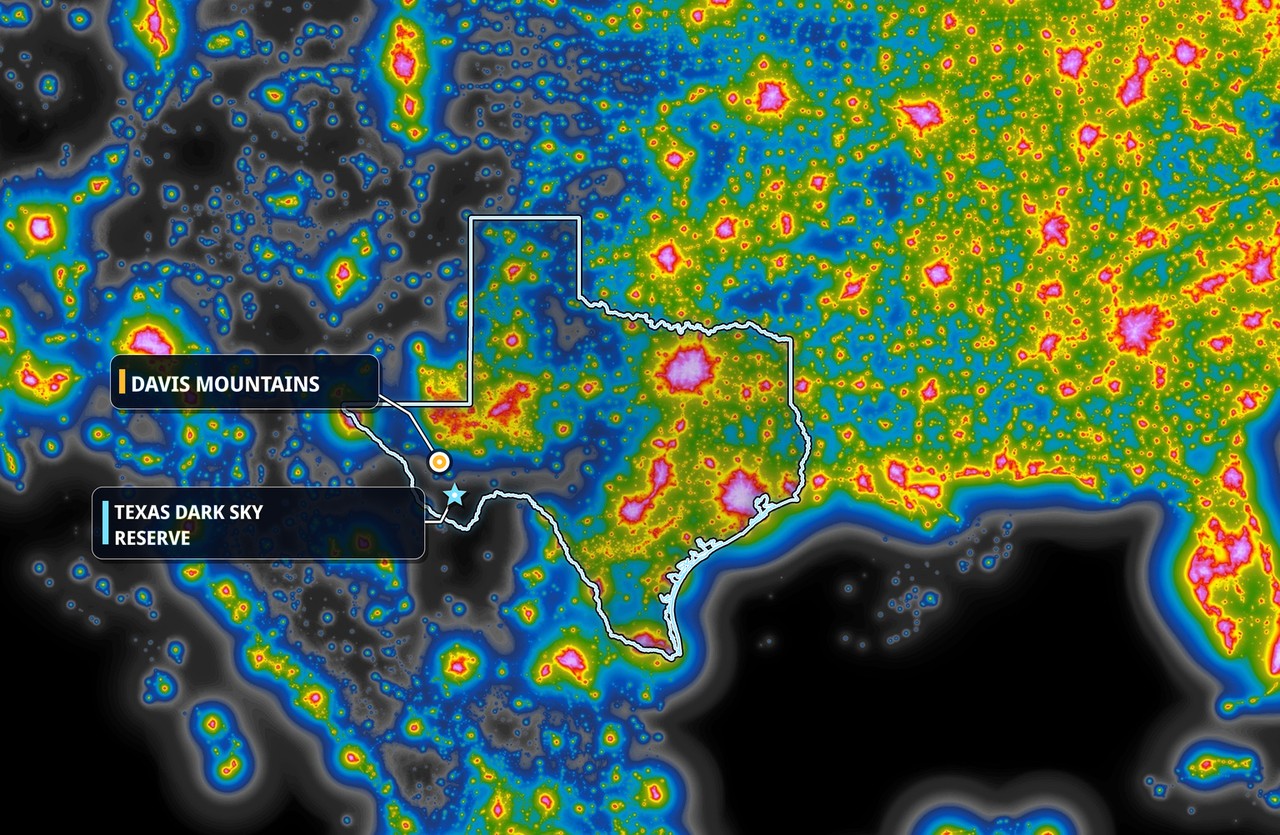
The map below shows light pollution across the United States using 2024 NASA/NOAA VIIRS satellite data, color-coded by Bortle class. Click anywhere to check sky darkness at that location. The contrast between West Texas and the urban corridors of the East and Gulf Coasts illustrates exactly why site selection matters as much as equipment.

When Automation Meets
a Compromised Sky

Smart telescopes — integrated systems combining optics, sensors, stacking software, and wireless control — have genuinely lowered the barrier to astrophotography. But they do not change the physics of light scatter. When a smart scope stacks frames under an orange-gray Bortle 7 sky, it integrates the noise along with the signal. The automation is real. The limitation is the photons.

🌫️

Skyglow & Gradient

Uneven light domes from urban cores impress a color gradient across the sensor that automated stacking cannot fully subtract. Even with gradient removal in post, the shot noise remains baked in.

📡

Signal-to-Noise Ceiling

Smart scopes shine on bright showpieces. On dim extended objects — faint galaxy halos, low-surface-brightness nebulae — the limiting factor is the ratio of target photons to sky background photons, not the algorithm.

🔴

Narrowband as a Workaround

Ha, OIII, and SII filters narrow the bandpass to a few nanometers, rejecting broad-spectrum skyglow. But narrowband is a workaround, not a solution — and it limits the target list significantly.

⏱️

Integration Time Tax

Every magnitude of sky background brightness roughly doubles the integration time required to achieve equivalent SNR. A one-magnitude improvement — Bortle 6 to 5 — can give back hours per session.

🎯

Dark Site Access Changes Everything

Place even a modest smart scope under a Bortle 2 sky and the results are transformative. Dark sky is not a luxury — it's the primary aperture upgrade available to any imager.

🔭

Our Vision

We are working toward a future where any imager — regardless of their local sky — can schedule time on a telescope sitting under genuinely dark skies, maintained by people who care about it as much as they do.

Micro-Observatories
in Low Earth Orbit

The endgame for light pollution isn't filtering around it — it's getting above it entirely. A new generation of miniaturized optical payloads on small satellites in LEO represents a radical democratization of space-based astronomy: the equivalent of putting a personal observatory above every cloud, every city, every atmosphere.

Microsatellites in 400–600 km orbits offer continuous access to targets free from atmospheric dispersion, scintillation, and any ground-based light contamination. What was once exclusive to Hubble-class missions is becoming feasible for a constellation of purpose-built small telescopes.

This is long-horizon thinking for LSO. We're watching the space closely, building the ground-based expertise and community that would make operating — and sharing access to — orbital observatories a natural next step.

What We're Building

We have a lot of ideas, and we're excited to build them out with the community. More projects are in the works — follow along, and let's build what the sky deserves.

BortleBug icon
BortleBug

Personalized astrophotography intelligence — sky quality forecasts, lunar scheduling, target windows, and per-telescope imaging reports tuned to your gear and your sky. Built for imagers who want to spend less time planning and more time imaging.

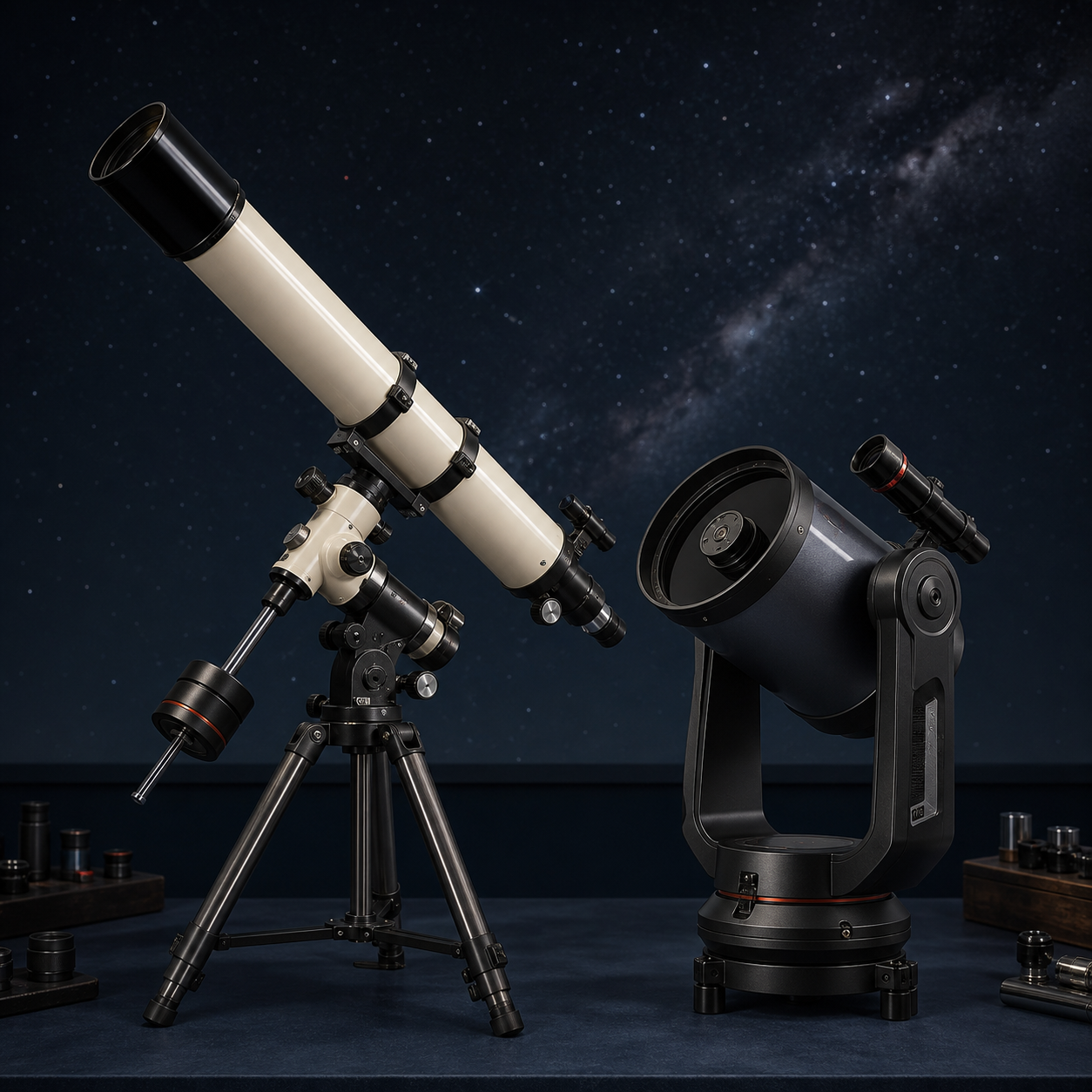
A classic refractor and a modern computerized telescope displayed together

Telescope Catalog

A community-built reference of telescopes and astronomy gear — scopes, mounts, filters, focusers, cameras, and accessories. Free for anyone to search; verified members can contribute and keep it growing.

250 telescopes and 250 equipment records at launch, with popular vintage and Japanese instruments included.

Browse the catalog →
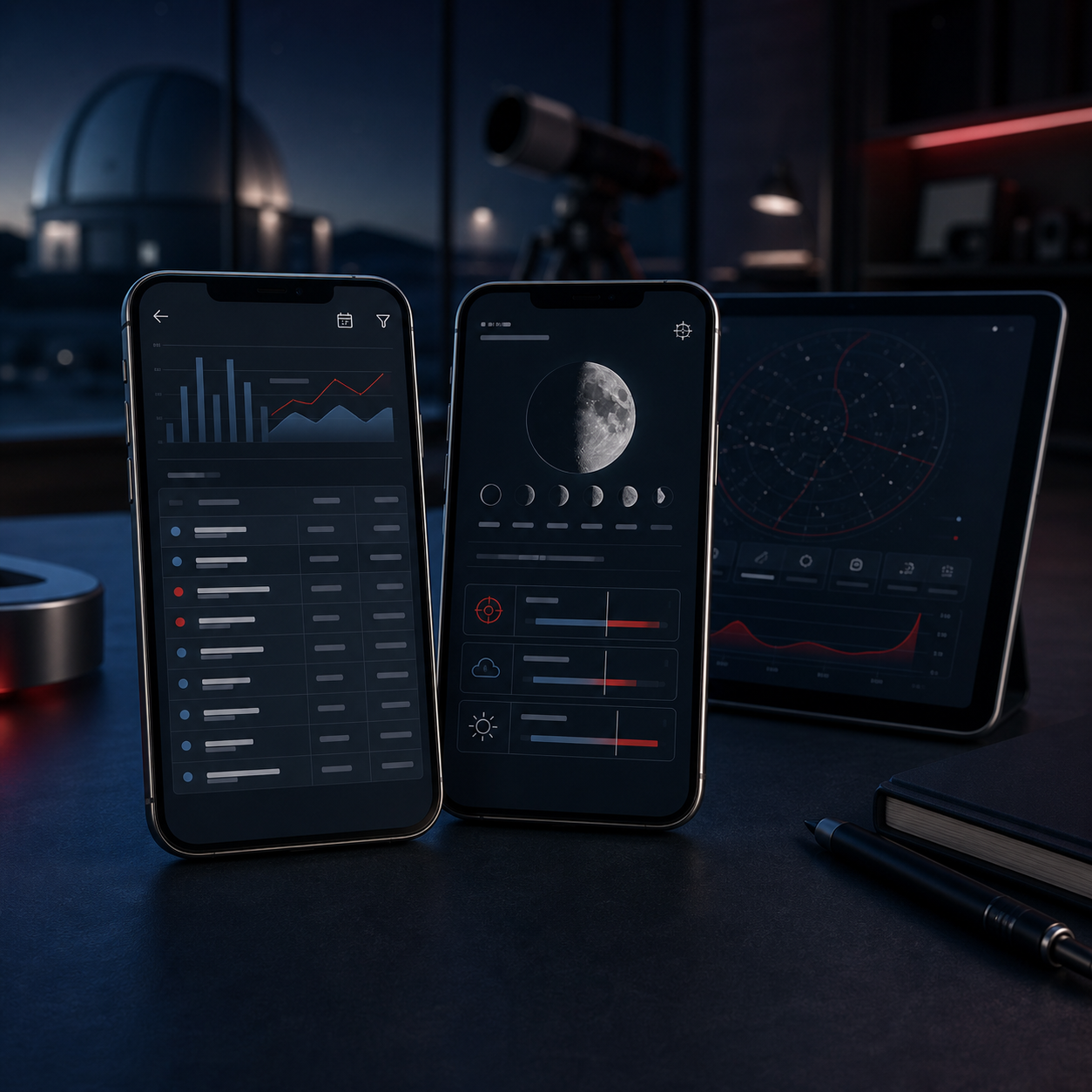
Mobile devices displaying reports and astronomy planning tools

Lone Star Codes Apps

Our software studio, Lone Star Codes, builds all sorts of focused utility apps — practical mobile tools that each do one thing well and keep your data on your own device. Order and auction exporters are here today, with more on the way.

Handy mobile utilities from the Lone Star Codes workshop.

Explore the apps →

Find LSO Out There

Follow along as we build the infrastructure, community, and tools the sky deserves.